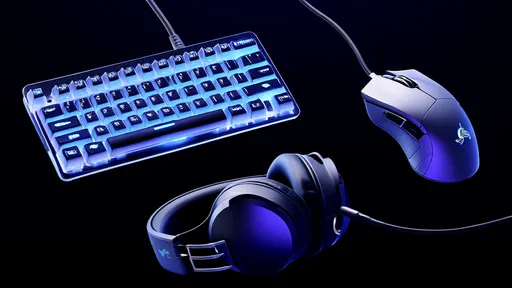
In the competitive landscape of PC peripherals, the term "involution" has become an apt descriptor for the relentless technological arms race unfolding in keyboards, mice, and headsets. What was once a market driven by basic functionality has transformed into a battleground where manufacturers push the boundaries of innovation, performance, and customization, often at a breakneck pace. This phenomenon isn't merely about incremental upgrades; it's a fierce competition to capture the attention—and wallets—of discerning consumers, from hardcore gamers and professional streamers to everyday users seeking a premium experience.
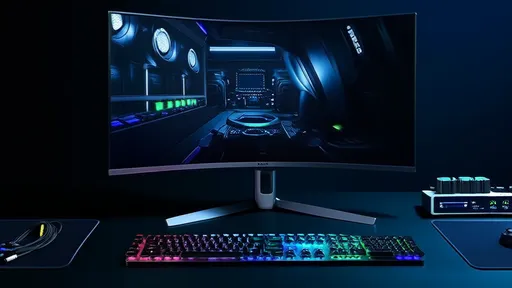
The keyboard segment exemplifies this technological escalation with startling clarity. Mechanical switches, once a niche preference, have become the standard, but the competition has moved far beyond Cherry MX clones. Companies are now developing proprietary switch technologies with claims of faster actuation, improved tactile feedback, and unprecedented durability, often boasting lifespans of 100 million keystrokes or more. The rise of hot-swappable PCBs has further fueled this, creating an entire ecosystem of aftermarket switches that cater to every imaginable preference for sound, feel, and performance. It’s no longer enough to have RGB lighting; now, we see per-key programmability, integrated OLED displays for system monitoring or custom animations, and even built-in soundboards. The pursuit of the perfect typing experience has become a deep, almost obsessive engineering challenge, blurring the line between a tool and a luxury item.
Simultaneously, the humble computer mouse has been thrust into its own high-stakes race for supremacy. The focus here is overwhelmingly on sensor precision, weight reduction, and connectivity. Sensors are now capable of tracking at dizzying DPI levels far beyond what any human could realistically use, a spec war that continues largely for marketing bragging rights. More meaningful innovations include the near-elimination of sensor spin-out and the implementation of motion sync technologies to ensure perfect coordination between the mouse's reports and the monitor's refresh cycle. The quest for lightness has led to radical design shifts, with companies drilling holes in shells to create "ultralight" models and experimenting with new materials like magnesium alloys and carbon fiber. Wireless technology, once plagued by latency concerns, has now achieved parity with, and in some tests even surpassed, wired connections thanks to advanced 2.4GHz dongles and low-latency protocols, making the cable an optional accessory for the elite player.
Perhaps the most immersive arena of this arms race is audio. Gaming headsets have evolved from simple stereo sound boxes into sophisticated audio hubs. The push for competitive advantage has seen the widespread adoption of surround sound technologies, both software-driven and through multiple physical drivers, all promising to give players pinpoint positional awareness of footsteps and reloads. High-fidelity drivers that support expansive frequency ranges are becoming commonplace, appealing not just to gamers but to audiophiles who demand quality for music and media. Active Noise Cancellation (ANC), a staple in premium travel headphones, is now a critical feature in gaming headsets, seeking to create an isolated auditory bubble for the user. Furthermore, the integration of high-quality, noise-cancelling broadcast-grade microphones with real-time monitoring ensures that the user's voice is transmitted with crystal clarity, making communication as crucial as listening in team-based environments.
Underpinning all three categories is the powerful, unifying force of software. Robust companion applications have become as important as the hardware itself. These suites allow for an incredible degree of customization, from remapping every button and creating complex macros to fine-tuning RGB lighting patterns and calibrating audio equalizers for specific game genres. Manufacturers are building elaborate software ecosystems that learn user preferences, sync settings across devices, and even integrate with popular games to provide dynamic lighting effects that react to in-game events. This deep software integration creates a sticky ecosystem, locking users into a specific brand once they have invested time in configuring their perfect setup.
This relentless involution presents a complex duality for the consumer. On one hand, it drives incredible innovation, delivering products with performance and features that would have been unimaginable a decade ago. Consumers have more choice and higher-quality options than ever before. On the other hand, it leads to market saturation, "feature creep" where new additions may be of questionable utility, and steadily rising price points for flagship products. The constant churn of new models can make consumers feel their gear is perpetually obsolete, fueling a cycle of endless upgrading.
Ultimately, the technological arms race in keyboards, mice, and headsets shows no signs of abating. As the lines between gaming, productivity, and entertainment continue to blur, peripheral makers will keep pushing the envelope. The future likely holds even greater integration of artificial intelligence for predictive customization, further advancements in materials science for sustainability and performance, and a deeper merger between hardware and software ecosystems. For the enthusiast, it's a golden age of choice and performance. For the industry, it's a demanding, relentless marathon where only the most innovative will thrive.

By /Aug 26, 2025

By /Aug 26, 2025
By /Aug 26, 2025
By /Aug 26, 2025
By /Aug 26, 2025
By /Aug 26, 2025

By /Aug 26, 2025
By /Aug 26, 2025

By /Aug 26, 2025

By /Aug 26, 2025

By /Aug 26, 2025
By /Aug 26, 2025
By /Aug 26, 2025

By /Aug 26, 2025

By /Aug 26, 2025

By /Aug 26, 2025
By /Aug 26, 2025

By /Aug 26, 2025

By /Aug 26, 2025

By /Aug 26, 2025
