Micro Cloud Architecture in Edge Computing Scenarios

Aug 26, 2025 By

The technology landscape is currently undergoing a profound shift, moving away from the centralized paradigm of hyperscale cloud data centers toward a more distributed and decentralized model. At the forefront of this transformation is the emergence of Micro Cloud architectures, a concept rapidly gaining traction for its potential to revolutionize how we process data and deliver services at the network's edge. This is not merely an incremental improvement but a fundamental rethinking of cloud infrastructure, designed to meet the stringent demands of latency, bandwidth, autonomy, and data sovereignty that traditional cloud models often struggle with.

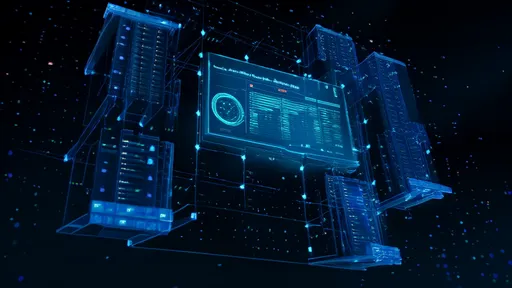
The core premise of a Micro Cloud is the deployment of a small-scale, self-contained cloud computing infrastructure physically close to where data is generated and consumed—the edge. Unlike a simple edge device or gateway, a Micro Cloud is a fully functional, albeit miniaturized, cloud stack. It typically integrates compute, storage, and networking resources into a single, ruggedized hardware appliance, capable of operating independently or with minimal connection to a central cloud. This architecture empowers organizations to run applications and process data locally, delivering near-instantaneous responses and avoiding the latency penalties inherent in backhauling data over long distances to a remote data center.

Driving this architectural evolution are several powerful, interconnected forces. The explosive growth of the Internet of Things (IoT) is flooding networks with unprecedented volumes of data from sensors, cameras, and smart devices. Transmitting all this raw data to a central cloud for analysis is often impractical, expensive, and slow. Furthermore, the rise of real-time applications—from autonomous vehicles and industrial robotics to augmented reality—imposes strict latency requirements measured in milliseconds, which only local processing can satisfy. Data privacy and residency regulations, such as GDPR, also compel businesses to keep sensitive information within specific geographical boundaries, a task for which the distributed nature of Micro Clouds is perfectly suited.

The architecture of a typical Micro Cloud is a marvel of modern engineering, packing powerful capabilities into a compact form factor. At its heart lies a virtualization layer, often leveraging lightweight container technologies like Docker or managed orchestration platforms such as K3s (a lightweight Kubernetes distribution). This allows for the seamless deployment and management of complex applications using modern DevOps practices. The hardware itself is designed for resilience, capable of operating in harsh environments—be it a factory floor, a retail store, a smart agriculture field, or a remote telecommunications site. These nodes are not isolated; they can form clusters to provide high availability and scale-out capacity, creating a resilient mesh of computing power at the edge.

A critical differentiator for Micro Clouds is their operational model. They are designed for zero-touch provisioning and remote management, enabling central IT teams to deploy, monitor, update, and secure a vast fleet of distributed edge nodes as if they were a single, logical entity. This manageability is crucial for overcoming the traditional operational challenges associated with distributed infrastructure. The relationship with the central cloud evolves from one of dependency to one of synergy. Micro Clouds act as intelligent data filters, processing vast datasets locally and only sending valuable insights, aggregated metadata, or exception events upstream to the central cloud for deeper analysis, long-term storage, or global coordination. This hybrid approach creates a powerful, tiered computing model.

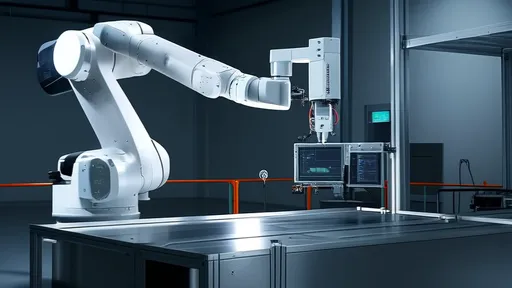
The practical applications of this architecture are vast and transformative. In manufacturing, a Micro Cloud on the factory floor can process video feeds from quality control cameras in real time, instantly identifying defects on the production line without a millisecond of delay. In smart cities, traffic management systems powered by local Micro Clouds can analyze vehicle and pedestrian flow from numerous intersections, optimizing traffic light patterns in real time to reduce congestion. For retail, in-store Micro Clouds can power personalized customer experiences, manage inventory through real-time analytics, and process transactions with unwavering reliability, even if the store's internet connection is temporarily lost.

However, the path to a mature edge computing ecosystem is not without its hurdles. Security takes on a new dimension at the edge, moving from a fortified central data center to thousands of physically exposed nodes. This demands a robust security model encompassing secure boot, hardware-based trust, encrypted storage, zero-trust network policies, and consistent, automated patch management. The sheer scale of deployment also presents logistical challenges in hardware lifecycle management, from initial shipping and installation to maintenance and eventual decommissioning. Ensuring consistent performance and resilience across diverse and sometimes unreliable network conditions remains a key focus area for developers and operators alike.

Looking ahead, the trajectory for Micro Cloud architectures is one of accelerated adoption and increasing sophistication. We can anticipate tighter integration with 5G and future network technologies, where Micro Clouds will be deployed directly within telecom operators' networks, bringing computational resources closer than ever to end-users. The convergence of Artificial Intelligence and edge computing will also deepen, with more AI inference and even training workloads being distributed across these edge nodes. As the technology matures, standardization of APIs and management frameworks will be essential to ensure interoperability and prevent vendor lock-in, fostering a healthy and innovative ecosystem.

In conclusion, the move toward Micro Cloud architectures represents a significant and necessary evolution in cloud computing. It is a direct response to the limitations of a purely centralized model in a world that is increasingly real-time, data-intensive, and geographically distributed. By bringing cloud capabilities to the edge, organizations can unlock new levels of efficiency, enable groundbreaking applications, and maintain control over their data. While challenges in security and management persist, the ongoing innovation in this space promises to overcome these barriers, solidifying the Micro Cloud not as a niche solution, but as an indispensable component of the modern, hybrid cloud infrastructure.

Recommend Posts
IT

Disaster Recovery and Geo-Redundancy Design for Kubernetes Clusters

By /Aug 26, 2025

In today's digital landscape, where business continuity is paramount, the resilience of Kubernetes clusters has become a critical focus for organizations worldwide. The shift towards cloud-native architectures has brought unprecedented agility and scalability, but it has also introduced complex challenges in maintaining service availability across geographical boundaries and during catastrophic events. As enterprises increasingly rely on containerized applications to drive their core operations, the need for robust disaster recovery and multi-active region strategies has moved from a best practice to an absolute necessity.
IT

Unified Management of Service Mesh in Hybrid Cloud Environments

By /Aug 26, 2025

The evolution of cloud computing has ushered in an era of unprecedented flexibility and scalability for enterprises, but it has also introduced a new layer of complexity. As organizations increasingly adopt hybrid and multi-cloud strategies to avoid vendor lock-in, optimize costs, and leverage best-of-breed services, the management of communication between services sprawled across these diverse environments has become a monumental challenge. Enter the service mesh—a dedicated infrastructure layer designed to handle service-to-service communication, security, and observability. However, the true test of its value lies not just in its existence within a single cloud but in its ability to provide a unified, consistent management plane across a fragmented hybrid cloud landscape.
IT

Intelligent Root Cause Analysis in Log Analysis with Artificial Intelligence

By /Aug 26, 2025

In the ever-evolving landscape of IT operations, the sheer volume and complexity of log data generated by modern systems have become both a treasure trove and a formidable challenge. As organizations increasingly rely on digital infrastructure, the ability to swiftly pinpoint the root cause of issues within these logs has transitioned from a luxury to an absolute necessity. Enter artificial intelligence—a transformative force that is redefining how enterprises approach log analysis and incident resolution.
IT

Challenges of Sim-to-Real Transfer in Reinforcement Learning

By /Aug 26, 2025

The realm of artificial intelligence has long been captivated by the promise of reinforcement learning, where agents learn optimal behaviors through trial and error in simulated environments. Yet, the grand challenge has always been bridging the chasm between these meticulously crafted digital worlds and the messy, unpredictable reality they aim to represent. This journey, known as Sim-to-Real transfer, is not merely a technical hurdle; it represents the fundamental frontier of deploying learned intelligence into the physical world.
IT

Comparison of Global Distributed Consistency Protocols for Cloud-Native Databases

By /Aug 26, 2025

The landscape of cloud-native databases has undergone a seismic shift in recent years, driven by the relentless demand for global scalability and unwavering data consistency. As organizations expand across continents, the challenge of maintaining data integrity while ensuring low-latency access has pushed distributed consistency protocols into the spotlight. These protocols, often shrouded in academic complexity, are now critical differentiators in the competitive database market.
IT

New Pathways for Optimizing Cold Start Latency in Serverless Computing

By /Aug 26, 2025

The persistent challenge of cold start latency in serverless computing has long been a thorn in the side of developers and organizations seeking to leverage the agility and cost-efficiency of Function-as-a-Service (FaaS) platforms. While the promise of serverless—abstracting away infrastructure management and scaling on demand—remains compelling, the unpredictable delays when invoking dormant functions have hampered its adoption for latency-sensitive applications. However, a new wave of optimization strategies is emerging, moving beyond conventional warm-up techniques and delving into more sophisticated, holistic approaches that address the root causes of cold starts.
IT

Real-time Detection and Adaptive Response to Model Drift in Machine Learning

By /Aug 26, 2025

In the rapidly evolving landscape of artificial intelligence, the phenomenon of model drift has emerged as a critical challenge for organizations deploying machine learning systems in production. As these models interact with real-world data streams, their performance can degrade over time due to shifting patterns in the underlying data distribution. This gradual deterioration, often subtle and insidious, can undermine business decisions, compromise operational efficiency, and erode user trust if left undetected.
IT

Research on Lightweight Container Alternative Technology Based on WebAssembly

By /Aug 26, 2025

In the rapidly evolving landscape of cloud computing and application deployment, a quiet revolution is brewing around containerization technologies. While Docker and traditional Linux containers have dominated the scene for the better part of a decade, a new paradigm is emerging that challenges the very foundations of how we think about portable, secure, and efficient runtime environments. This shift is being driven by WebAssembly, once confined to the browser but now breaking free as a serious contender for building the next generation of lightweight, cross-platform containers.
IT

Carbon Efficiency Measurement and Optimization Tools for Cloud Platforms

By /Aug 26, 2025

As climate change accelerates, the technology sector faces increasing pressure to address its environmental footprint. While much attention has been paid to hardware efficiency and renewable energy sourcing, a critical aspect often overlooked is the carbon efficiency of cloud platforms. These digital infrastructures power everything from streaming services to enterprise applications, making their environmental impact substantial and worthy of examination.
IT

Revolutionizing Workflows in 3D Asset Creation with Generative AI

By /Aug 26, 2025

The landscape of 3D asset creation is undergoing a seismic shift, driven by the relentless advancement of generative artificial intelligence. For decades, the process of building the intricate 3D models that populate our video games, films, and virtual simulations has been a domain reserved for highly skilled artists and technical wizards, wielding complex software and investing hundreds, sometimes thousands, of hours into a single asset. This painstaking, manual process is now being fundamentally re-engineered, not by replacing the artist, but by augmenting their capabilities in ways previously confined to science fiction.
IT

Testing the Boundaries of Multimodal Model Comprehension: Text, Images, and Sound

By /Aug 26, 2025

In the rapidly evolving landscape of artificial intelligence, the pursuit of multimodal systems has become a central focus for researchers and developers alike. These systems, designed to process and integrate multiple forms of data—such as text, images, and sound—represent a significant leap toward more human-like comprehension. However, as these models grow in complexity, understanding the boundaries of their capabilities has emerged as a critical challenge. The quest to map the limits of multimodal understanding is not merely an academic exercise; it holds profound implications for the future of AI applications across industries, from healthcare to entertainment.
IT

Data Fabric: Achieving Seamless Connectivity of Enterprise Data

By /Aug 26, 2025

The modern enterprise data landscape resembles a sprawling metropolis with information flowing through countless systems, applications, and storage repositories. This complex ecosystem, while rich with potential insights, often operates in silos, creating significant challenges for organizations striving to become truly data-driven. The traditional approach of moving data to centralized warehouses or lakes has proven increasingly inadequate, often creating more complexity than it resolves. Data Fabric has emerged as a transformative architectural approach, promising not just to connect these disparate data sources but to weave them into a cohesive, intelligent, and actionable whole.
IT

Breakthrough in Context Window Expansion Technology for Large Language Models

By /Aug 26, 2025

Recent advancements in large language models have brought a critical bottleneck into sharp focus: the limitations of context windows. For years, researchers and developers have watched these models demonstrate remarkable prowess in generating human-like text, only to be constrained by their inability to process and retain extensive information within a single session. The traditional boundaries, often capping at a few thousand tokens, have acted as a straitjacket, preventing LLMs from tackling complex, long-form tasks that require deep, sustained context. This fundamental limitation has sparked an intense race within the AI community to develop robust and scalable techniques for context window expansion.
IT

The Future of Cloud-Native Application Delivery: Modular Practices with WebAssembly

By /Aug 26, 2025

The landscape of cloud-native application delivery is undergoing a seismic shift, driven by the relentless pursuit of efficiency, portability, and security. For years, containers have been the undisputed champion, providing a standardized unit for packaging and deploying applications. However, a new paradigm is emerging, one that promises to address some of the inherent limitations of container-based architectures. At the forefront of this evolution is WebAssembly, or Wasm, initially conceived for client-side web applications but now rapidly spilling over into the server-side and cloud-native ecosystem. Its potential to revolutionize how we build, ship, and run applications is becoming increasingly undeniable.
IT

Micro Cloud Architecture in Edge Computing Scenarios

By /Aug 26, 2025

The technology landscape is currently undergoing a profound shift, moving away from the centralized paradigm of hyperscale cloud data centers toward a more distributed and decentralized model. At the forefront of this transformation is the emergence of Micro Cloud architectures, a concept rapidly gaining traction for its potential to revolutionize how we process data and deliver services at the network's edge. This is not merely an incremental improvement but a fundamental rethinking of cloud infrastructure, designed to meet the stringent demands of latency, bandwidth, autonomy, and data sovereignty that traditional cloud models often struggle with.
IT

Fine-tuning of Vertical Domains for Small Language Models

By /Aug 26, 2025

The landscape of artificial intelligence is witnessing a subtle yet profound shift as industry leaders and research institutions increasingly turn their attention to the strategic refinement of small language models (SLMs). Unlike their larger counterparts, which dominate headlines with sheer scale, these compact models are being meticulously tailored for specialized domains, promising efficiency, precision, and accessibility previously unattainable in broader AI systems.
IT

FinOps Maturity Model: The Path to Advanced Cloud Cost Management for Enterprises

By /Aug 26, 2025

In today's rapidly evolving digital landscape, enterprises are increasingly turning to cloud infrastructure to drive innovation and scalability. However, this shift brings with it a complex challenge: managing and optimizing cloud costs effectively. The FinOps maturity model has emerged as a critical framework guiding organizations through this journey, offering a structured path from initial cost awareness to advanced financial operations in the cloud.
IT

Artificial Intelligence-Aided Cybersecurity Threat Hunting

By /Aug 26, 2025

In the ever-evolving landscape of digital security, organizations are increasingly turning to advanced methodologies to stay ahead of cyber threats. Among these, threat hunting has emerged as a proactive approach, moving beyond traditional reactive measures. With the integration of artificial intelligence, this practice is undergoing a transformative shift, enabling security teams to detect and neutralize threats with unprecedented speed and accuracy.
IT

Solutions for Non-IID Data in Federated Learning

By /Aug 26, 2025

In the rapidly evolving landscape of machine learning, federated learning has emerged as a transformative approach, enabling model training across decentralized devices while preserving data privacy. However, one of the most persistent challenges in this domain is the prevalence of non-independent and identically distributed (Non-IID) data. Unlike the ideal scenario where data is uniformly distributed, real-world applications often grapple with skewed, heterogeneous data distributions across clients, which can severely hamper model performance and convergence.
IT

Cost Governance Strategies for Observability Data

By /Aug 26, 2025

In today's data-driven technological landscape, observability has become the cornerstone of maintaining robust and reliable systems. Organizations are increasingly investing in tools and platforms that generate, collect, and analyze vast amounts of telemetry data—metrics, logs, and traces—to gain insights into their applications' health and performance. However, this surge in data comes with a significant financial burden. Without a strategic approach to cost governance, the expenses associated with storing, processing, and querying observability data can spiral out of control, undermining the very benefits these systems are meant to provide.